
The Value of Bench-Scale Testing Before Making a Full-Scale Change
Making a change to a water treatment process can be expensive and what looks good on paper doesn’t always behave the same way once it meets the actual water.
Different source waters have different chemistry, organic loads, turbidity and treatment challenges. So before changing a chemical, adjusting a process or investing in new treatment infrastructure, there’s considerable value in asking a simple question:
Can we test it first?
Bench-scale testing allows treatment options to be investigated under controlled conditions using the actual water in question. It provides practical data before changes are introduced at full scale helping reduce uncertainty, optimise treatment conditions and potentially avoid costly trial and error.
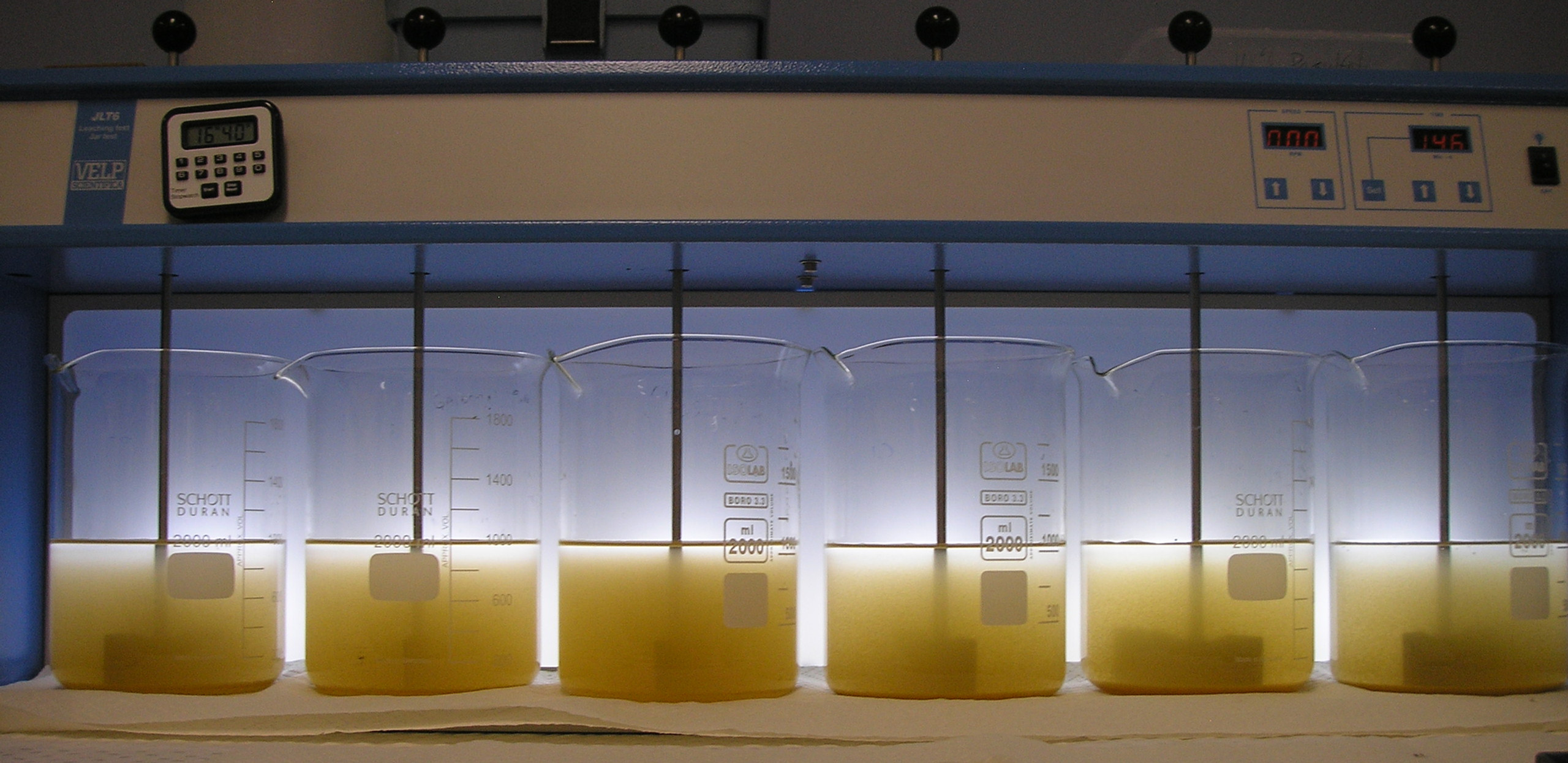
Jar Testing: More Than Just Finding a Dose
Jar testing is one of the simplest and most useful examples of bench-scale treatment optimisation.
Rather than increasing or decreasing coagulant dose based purely on operational observations, jar testing allows multiple conditions to be compared side-by-side.
Depending on the treatment objective, this can include investigating:
Different coagulants or treatment chemicals
Optimum chemical dose
pH adjustment
Mixing and flocculation conditions
Turbidity and colour removal
DOC/TOC removal
The impact of changing raw water quality
It can also be particularly valuable when considering a new chemical or supplier. Instead of making a full-scale switch and hoping for comparable performance, the products can first be assessed under the same controlled conditions.
Sometimes the existing treatment is already close to optimum. Sometimes a surprisingly small adjustment makes a significant difference. And sometimes the chemical that looks best on a specification sheet isn’t the one that performs best in the water.
That’s exactly what bench-scale testing is designed to uncover.
Exploring Changes to Disinfection Strategy
The same principle can apply when investigating changes to disinfection processes.
For example, the decision between chlorination and chloramination involves more than simply choosing a different disinfectant. The behaviour of each system is influenced by water chemistry, disinfectant demand, contact time, organic matter and treatment objectives.
Bench-scale studies can help investigate how the actual water responds under different conditions before broader process changes are considered.
The objective isn’t to replicate an entire distribution network on a laboratory bench. It’s to generate useful evidence about the chemistry and likely treatment response so that subsequent decisions are better informed.
Understanding Ozone Demand Before Optimising Ozone
Ozone is another treatment process where the characteristics of the source water matter enormously.
Natural organic matter and other oxidisable constituents consume ozone, meaning the applied dose is not necessarily the dose available to achieve the intended treatment objective.
An ozone demand study can investigate how rapidly ozone is consumed by a particular water and help establish appropriate dose and contact conditions.
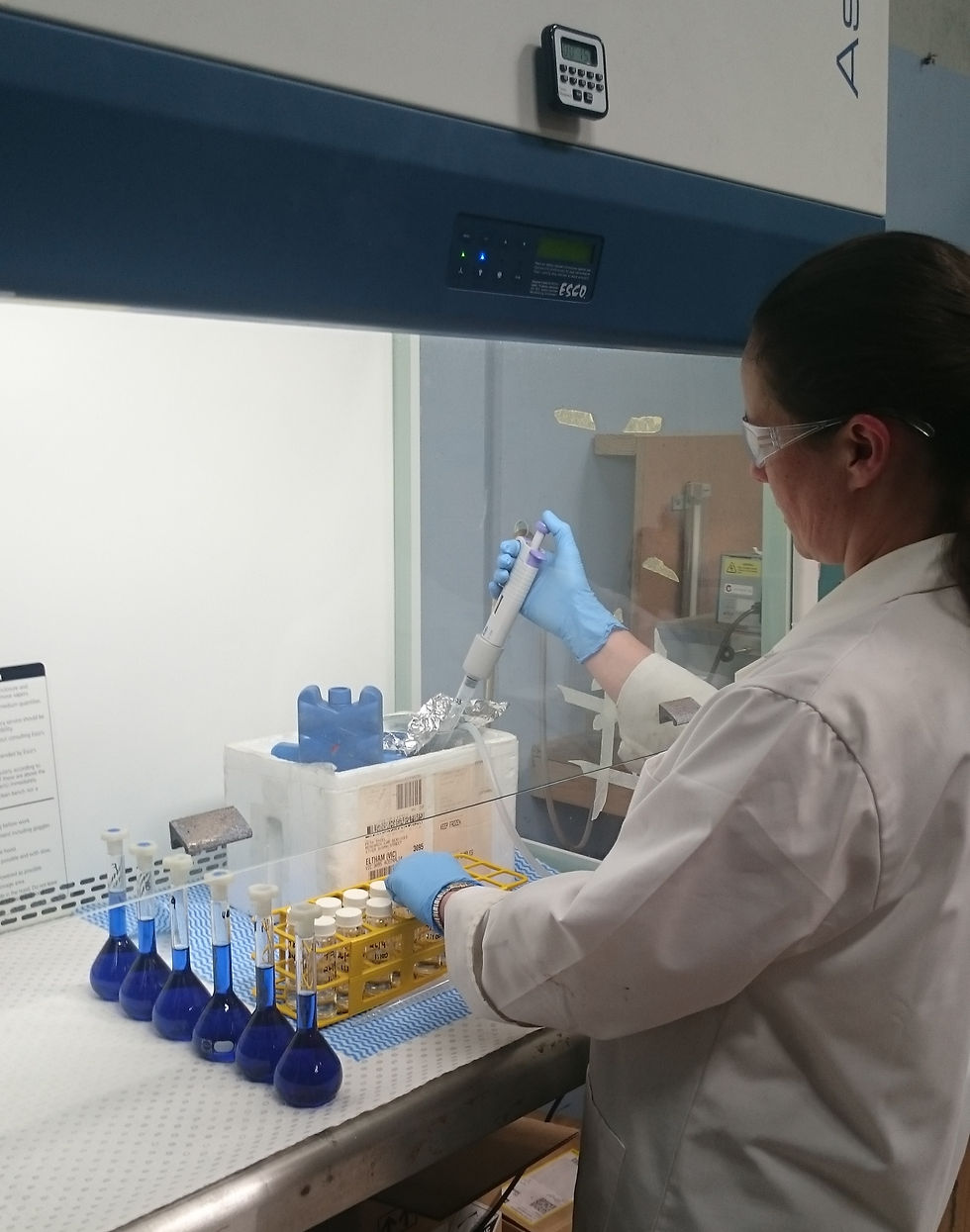
This can be useful when assessing ozone for applications such as oxidation, taste and odour treatment or as part of an ozone/BAC treatment process.
Again, the important point is that the answer comes from testing the water itself rather than relying solely on assumptions based on another plant, another source water or a theoretical dose.
Small-Scale Testing, Bigger Decisions
Bench-scale studies don't replace full-scale operational knowledge or pilot testing where it is required.
What they can do is provide an efficient first step.
They allow unsuitable options to be identified early, promising conditions to be narrowed down and more detailed studies to begin with a much stronger understanding of the treatment process.
For utilities and treatment operators, that can mean less uncertainty, fewer full-scale experiments and better evidence behind operational decisions.
At Research Laboratory Services (RLS), we conduct bench-scale and application studies across a range of water treatment processes, including coagulation and jar testing, treatment chemical evaluation, ozone demand and adsorption/treatability studies.
Because when you're considering a significant change to a treatment process, testing it on the bench first can be a very small experiment that informs a much bigger decision.


