
What is Jar Testing and Why It Matters in Water Treatment
- Sep 16, 2025
- 2 min read
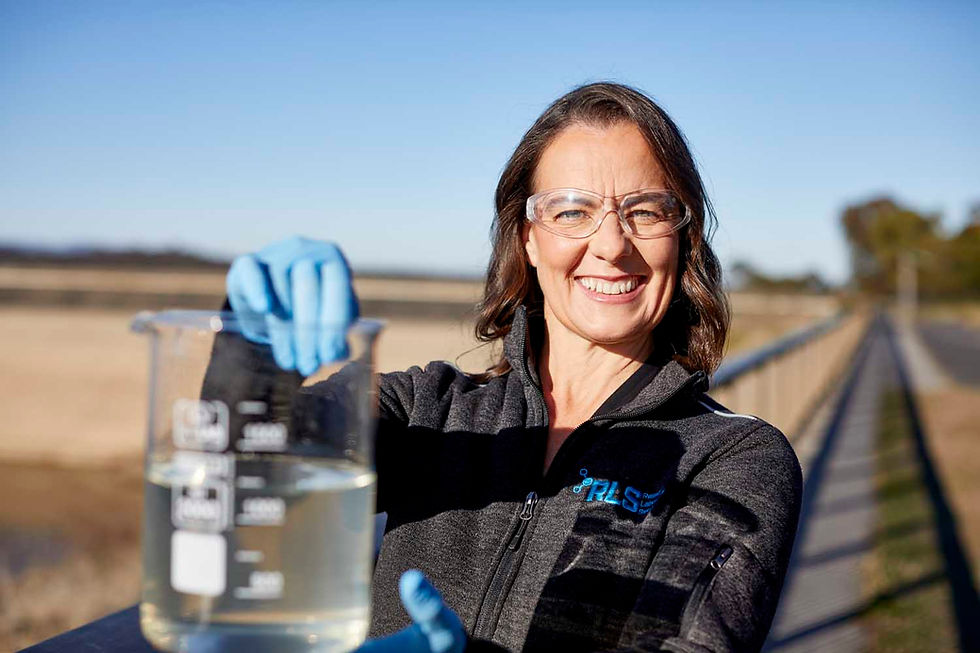
When it comes to producing safe, clean drinking water, one of the most important processes is coagulation and flocculation. But how do operators know which coagulant to use, or the right dosage for their water source?
That’s where jar testing comes in.
Jar testing is a simple but powerful laboratory procedure that simulates how treatment chemicals will perform in real-world water treatment plants. By providing clear, data-driven insights, jar testing helps operators make confident decisions that optimise performance, save money, and ensure compliance with regulatory standards.
What is Jar Testing?
Jar testing involves filling a series of beakers (or "jars") with raw water from a treatment source, then adding different amounts or types of coagulants (such as alum, ferric chloride, ACH, or polymers). The samples are stirred and settled under controlled conditions that mimic the treatment plant process.
By observing how particles clump together (floc formation) and how much turbidity or colour is removed, operators can determine:
The most effective coagulant type for their water.
The optimal dosage for achieving the best results.
How changes in pH, alkalinity, or temperature might affect performance.
Why Jar Testing Matters
1. Improves Water Quality
Jar testing ensures that coagulation and flocculation are working as effectively as possible, leading to clearer, safer drinking water that meets or exceeds guidelines.
2. Saves Money
Overdosing chemicals wastes resources and increases operating costs. Underdosing risks poor water quality and compliance issues. Jar testing pinpoints the "sweet spot" for dosage efficiency.
3. Reduces Risk
Every source water is unique, and conditions can change seasonally. Jar testing helps operators adapt quickly to changing raw water quality, avoiding treatment failures.
4. Supports Compliance
Regulators require water treatment plants to demonstrate that they are controlling turbidity, colour, and pathogens effectively. Jar testing provides the documented evidence to back up operational decisions.
When Should You Use Jar Testing?
Seasonal Changes – such as during algal blooms, heavy rainfall, or drought.
Source Variability – when drawing from multiple rivers, reservoirs, or catchments.
Process Optimisation – to improve plant efficiency or troubleshoot issues.
New Coagulant Trials – before committing to a chemical change at full scale.
How Research Laboratory Services Can Help
At Research Laboratory Services (RLS), we provide professional jar testing and coagulation optimisation services for councils, utilities, and industry. Our team not only performs the tests, but also interprets the results—giving you clear recommendations on the best coagulants, dosages, and treatment strategies for your unique water source.
With decades of hands-on experience in both laboratories and full-scale treatment plants, we translate jar testing results into practical, actionable solutions that improve water quality, lower costs, and support compliance.
Final Thoughts
Jar testing may look simple, but it is one of the most important tools in the water treatment industry. By helping operators choose the right coagulant and dose, jar testing ensures that water is treated efficiently, effectively, and sustainably.
If you’re looking to optimise your coagulation process or troubleshoot treatment challenges, get in touch with Research Laboratory Services for expert jar testing support.
📞 (03) 9431 2595


While jar testing focuses on water treatment efficiency, it’s important to recognize the broader impacts of environmental quality on communities. Clean, safe water reduces stress and supports overall well-being, highlighting the intersection of public health and mental health treatment. Ensuring access to safe water is one step toward promoting healthier, more resilient communities .